Press & Polish
Dry Cleaning Services
Dry cleaning is professional cleaning that uses a solvent other than water. It is one possible approach for garments whose labels, fibers, or construction are a poor match for ordinary washing.

How dry cleaning differs
Washing uses water and agitation. Dry cleaning uses a non-water solvent in professional equipment. The two are not interchangeable.
A care label may show a professional-cleaning symbol, a wash symbol, or both. Some garments combine an outer cloth with a lining, interfacing, or trim that does not share the same limit. That is why a label is the start of a question, not a finished instruction for every stain.
Press & Polish does not publish solvent names as a home method, and this page does not claim that dry cleaning removes every stain or leaves every color unchanged.
Water washing moves soil with detergent and agitation. Dry cleaning is used when that combination is a poor match for the cloth, the lining, or the finish. Structured jackets, some coats, and garments marked for professional cleaning are typical reasons to ask. A plain cotton shirt with a wash symbol may not need the same route.
Before you call +56 2 3243 2291 or email [email protected], note the fiber, the professional-cleaning symbol if there is one, and any stain you can see. Do not test the stain with a household solvent. Heat from an iron can also set a mark that has not been assessed. Pressing, if it happens, is a later step and still follows the fiber.
What to consider
Care label
Note any professional-cleaning circle, a “do not wash” instruction, and fiber content if it is printed beside the symbols.
Construction
Structured jackets, lined dresses, and coated fabrics can react differently from a plain woven shirt. Describe what you can see.
Stains and wear
Say where a stain is and what you think caused it, if you know. Unknown stains are not a promise of removal.
Continue reading

Coats and jackets
Outerwear often has linings and padding worth mentioning in an inquiry.
Before you ask about dry cleaning
The useful facts are on the garment and in what has already happened to it. A general wish for “dry cleaning” is less helpful than the label and the condition.
Start with the professional-cleaning symbol, usually a circle, and with any words printed beside the fiber content. A circle with a cross through it is a “do not” for that process. Letters inside a circle can point toward a professional method. If you cannot read a mark, copy the line you can see instead of guessing. A missing label is itself a fact worth stating.
Then look at construction. A jacket may have a lining, canvas, shoulder pads, and buttons that do not match the outer cloth. A coat may have a waterproof finish or hardware. A dress may have pleats or beading. Those parts can limit what is sensible even when the main fiber looks straightforward. Color that has already faded, a seam that is weak, and a repair that is coming loose should be named as condition, not treated as a defect the website promises to fix.
Stains need a location and, if you know it, a cause. Ink, oil, makeup, food, and mildew are different problems. Do not wet the mark, do not iron it, and do not try a household solvent to see what happens. Heat and some liquids can set a stain or spread it. If someone already tried a treatment, describe the product in plain words.
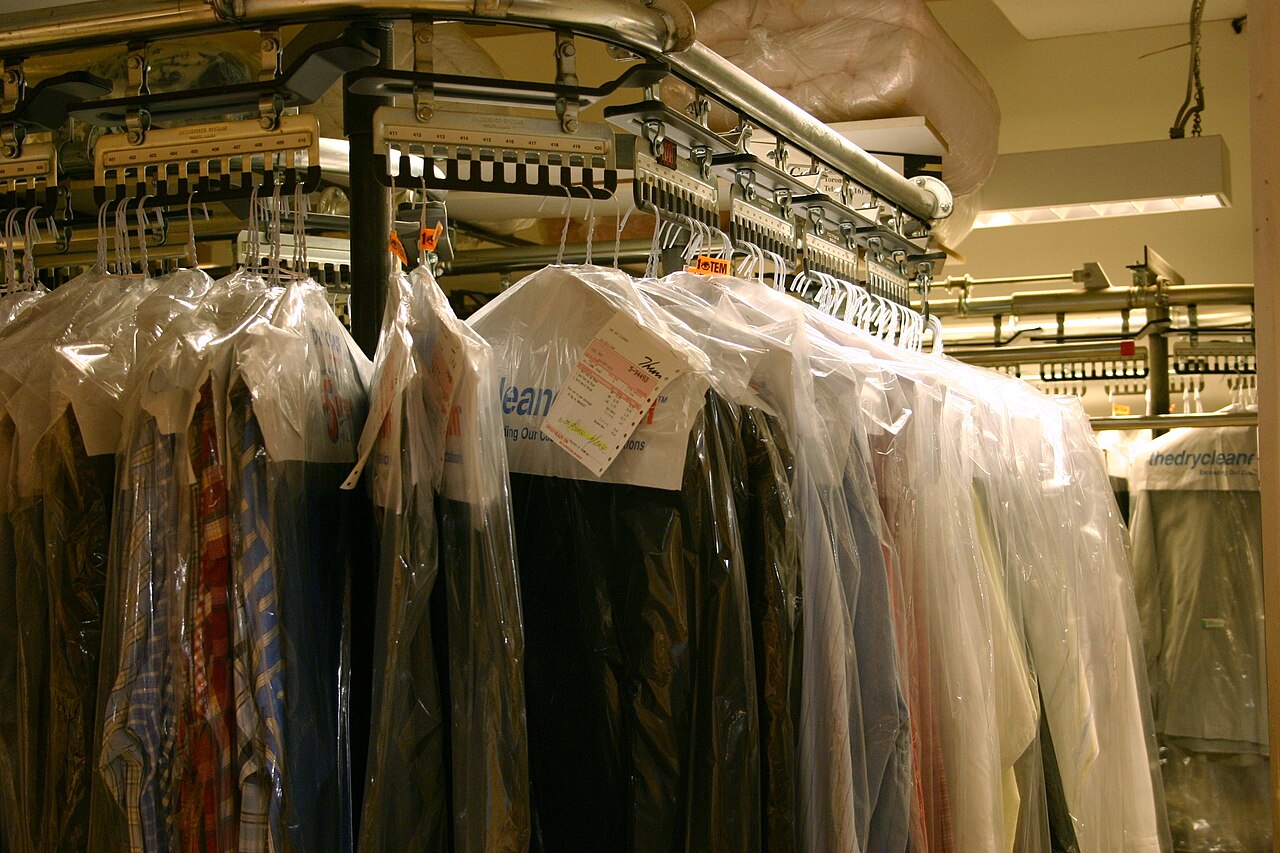
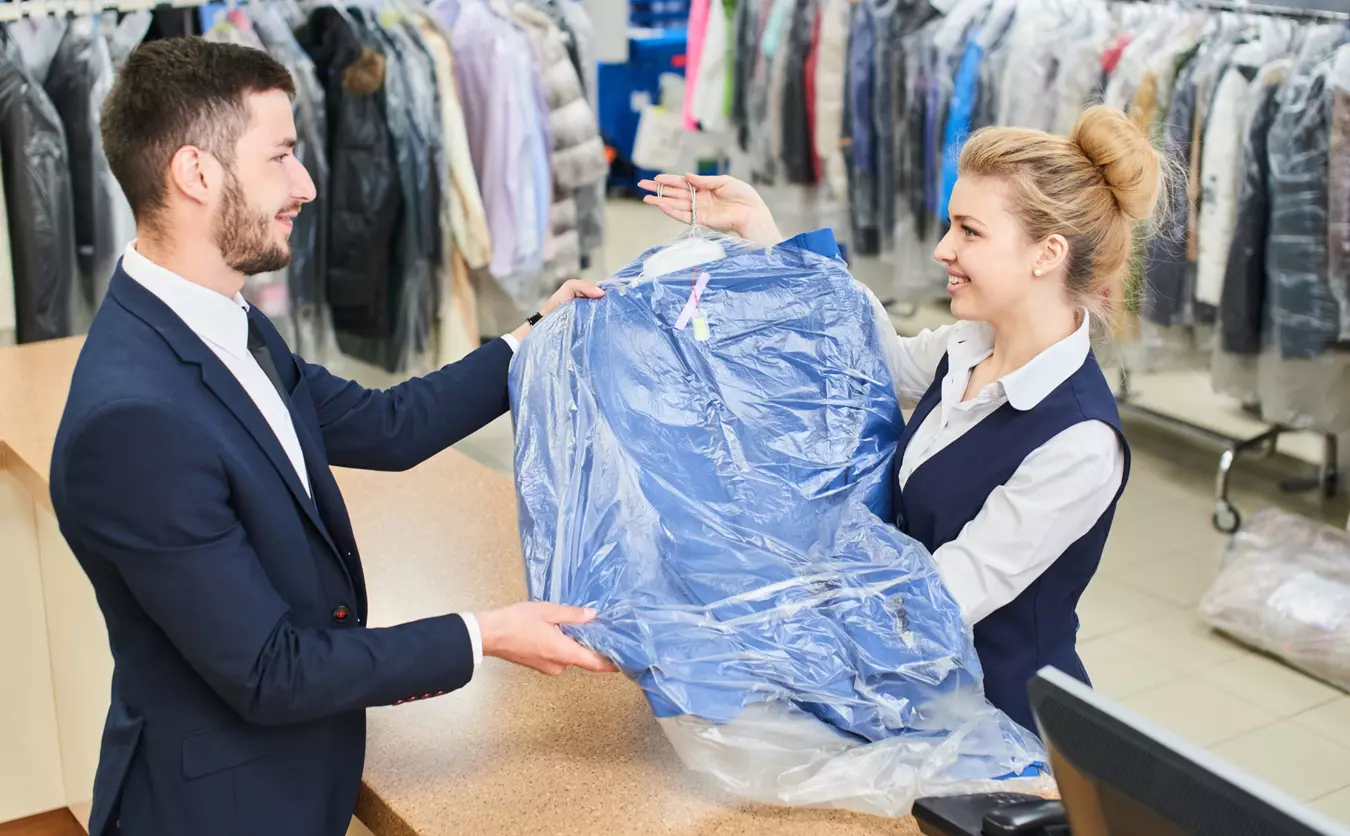
Dry cleaning is not a promise that every mark will leave, that every color will stay, or that every finish will look new. It is a professional non-water process used when water washing is a poor match. Ask at Eliodoro Yáñez 2331, Providencia, by calling +56 2 3243 2291, or by emailing [email protected]. The photographs of bagged garments on this site illustrate the subject. They are not a picture of the Providencia counter.